
The New Culture Code...
...is the code of ONE

Hello dear reader,
Hope you are enjoying the holidays. Frankly, this time of the year bores me - it is just too much hype and too many pictures of food, travel and what not.
Don’t get me wrong - I love food and travel - just not the pictures. Surely, we can live in private. Or maybe not. Who am I to say?
Anyway, let’s focus on the topic today.
This piece is about org culture. The biggest lie. Or let’s say the biggest cover up or maybe where pictures on LinkedIn speak louder than words? (again).
OK, I am digressing. The point is a mass culture code just doesn’t work anymore. Let’s discuss what might.
Organisational culture did not begin as a corporate aspiration. It began as an observation.
In the early 20th century, thinkers like Max Weber and Frederick Taylor tried to make sense of how work functioned at scale. Taylor believed efficiency could be engineered; Weber believed bureaucracy created order (1). Both assumed humans could be stabilised through structure. Culture, in that world, was compliance.
As corporations grew, culture was standardised. Values became statements. Behaviour was codified. The messiness of human experience was replaced with neat frameworks and laminated posters. Culture stopped being something people lived and became something they were expected to align with.
That model assumed sameness - that employees would internalise a shared set of values regardless of background, role, temperament, or power. It worked when organisations were stable, hierarchical, and slow-moving.
It breaks down in a world that is fragmented, hybrid, AI-augmented, and cognitively overloaded.
Today, work is no longer a collective rhythm. It is a network of individual negotiations - between humans and machines, autonomy and control, speed and meaning. Culture, as a single unifying force, struggles to survive this reality.
Which brings us to the real shift underway.
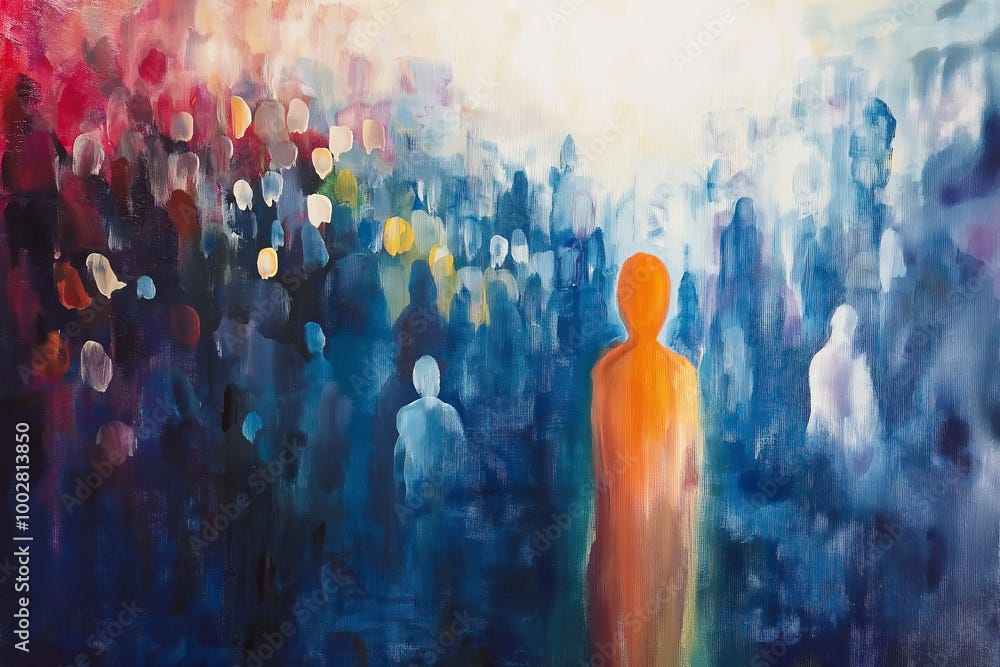
The next culture code is not collective. It is personal.
It is less about what the organisation claims to stand for, and more about how each person experiences judgment, safety, trust, and agency in real time. Culture now lives in micro-decisions: how dissent is handled in a meeting, how ambiguity is tolerated, how power responds when challenged.
This raises uncomfortable questions. Are organisations rewarding conformity disguised as values? Are they equipping people to think, or merely to comply? Is “culture fit” a proxy for comfort, or a way to avoid difference?
In an age where individuals work alongside algorithms, the defining capability is no longer alignment - it is discernment.
The future of culture will not be written on walls.
It will be expressed in behaviour.
And it will be built, one human judgment at a time.
The New Culture Code Is a Code of One.
Illustration: Adobe Stock
(1) Frederick Taylor and Scientific Management, Bureaucratic Management Theory of Max Weber
The most dangerous question in the AI age sounds pragmatic:
“Where do we put the humans when AI does the work?”
It isn’t pragmatic. It’s diagnostic.
It reveals a hidden premise: humans are primarily functions—and “not being needed” becomes an existential defect.
AI doesn’t just change jobs. It relocates the bottleneck: from output to judgment—criteria formation, accountability, refusal, and the ability to stay coherent under uncertainty.
Essay here:
👉 https://open.substack.com/pub/leontsvasmansapiognosis/p/the-most-dangerous-question-in-the
— Leon Tsvasman